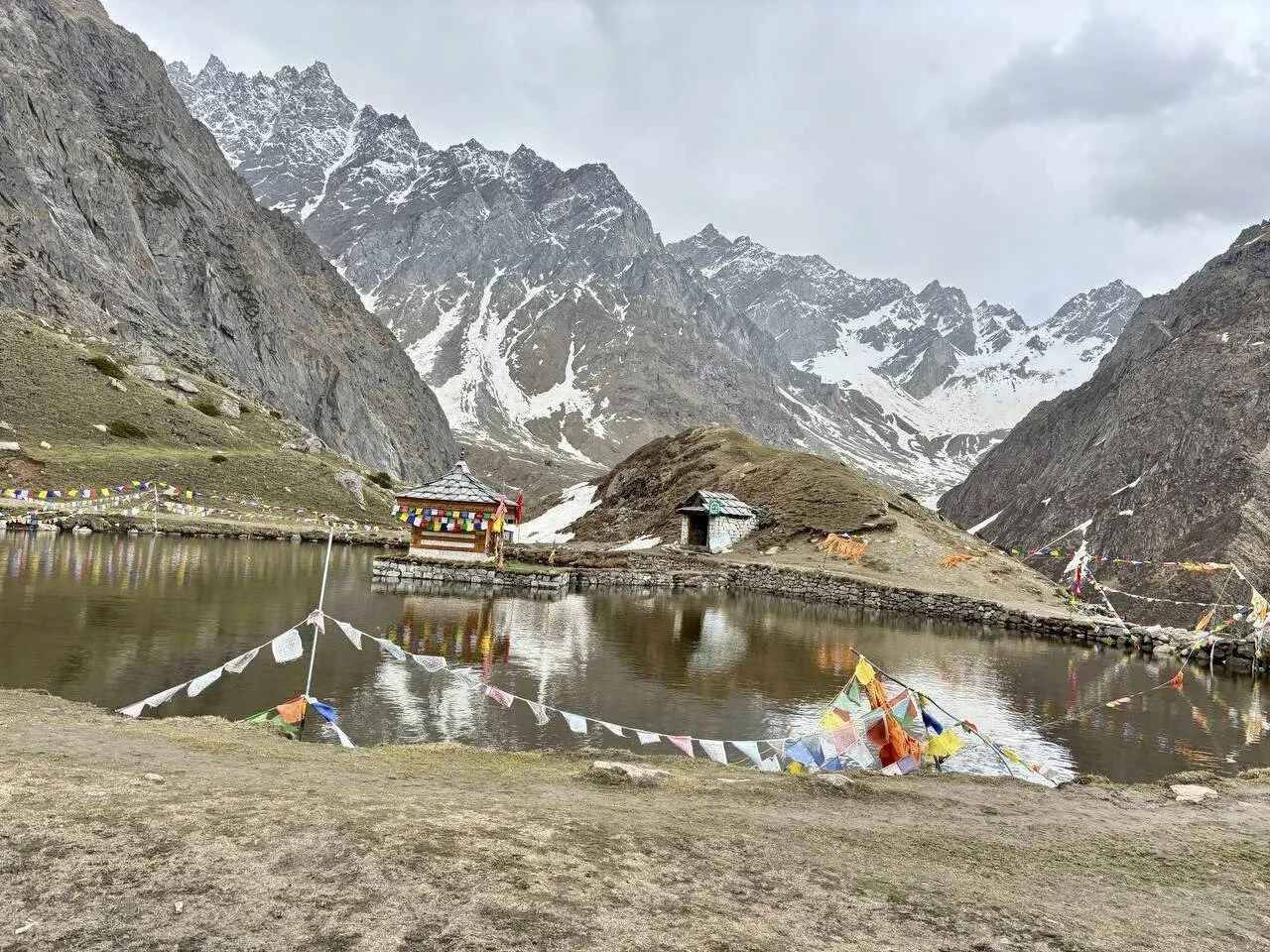
About Yulla Kanda
Yulla Kanda is a sacred high-altitude lake in the Rora Valley of Kinnaur district, Himachal Pradesh. On a small island in its centre stands a temple of Lord Krishna. At around 3,895 metres (12,778 ft), it is widely regarded as the highest Krishna temple in the world. The word “kanda” in the local language refers to high mountain pastures, and the temple sits amid wide meadows ringed by Himalayan peaks.
The shrine is looked after by the Bhagwen (Bhagwain) temple committee of Yulla village. Locally the place is also called Bhagwen. The people of Yulla and the surrounding villages of Kinnaur consider it their most sacred site, and visit it most of all on Janmashtami.
History & legend

Local tradition says the Pandavas built the temple and created the lake during their exile, and that the idol of Shri Krishna is swayambhu (self-manifested). For centuries, shepherds and villagers have climbed to the lake to seek Kanha’s blessings for their families, flocks and harvest.
The Kinnauri cap ritual
The best-known custom at Yulla Kanda is the cap ritual. Devotees take off their traditional green-bordered Kinnauri topi, turn it upside-down and set it on the lake. If the cap floats across without sinking, it is believed the coming year will be blessed and a wish fulfilled.
Janmashtami at Yulla Kanda
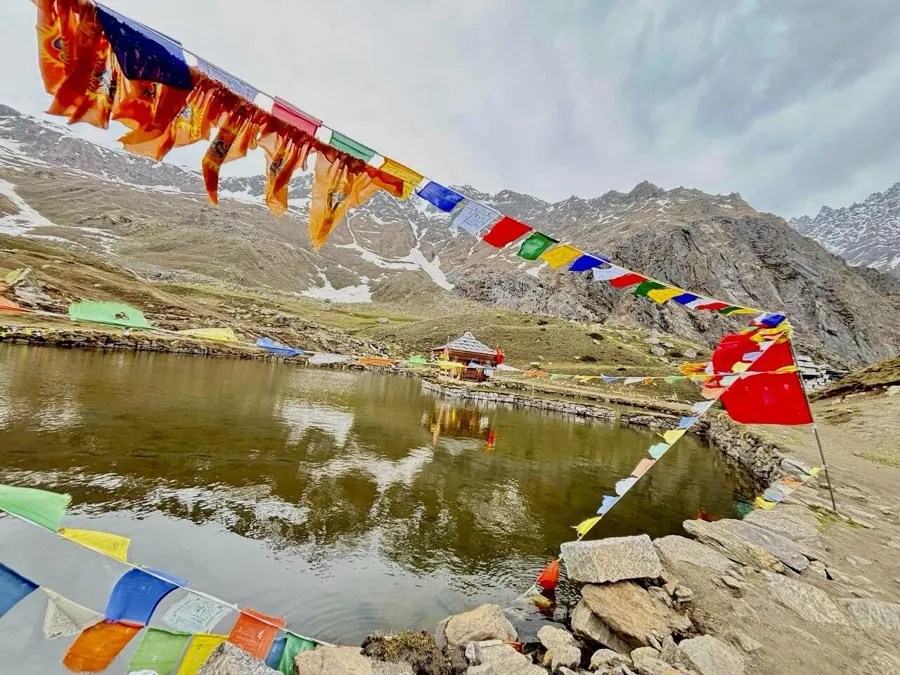
The temple’s biggest festival is Krishna Janmashtami (August/September). Thousands of devotees trek up for the mela. There are drums, bhajans, folk naati dances and prasad, and the meadows fill with tents. See our Janmashtami Yatra →
Yulla Kanda trek route
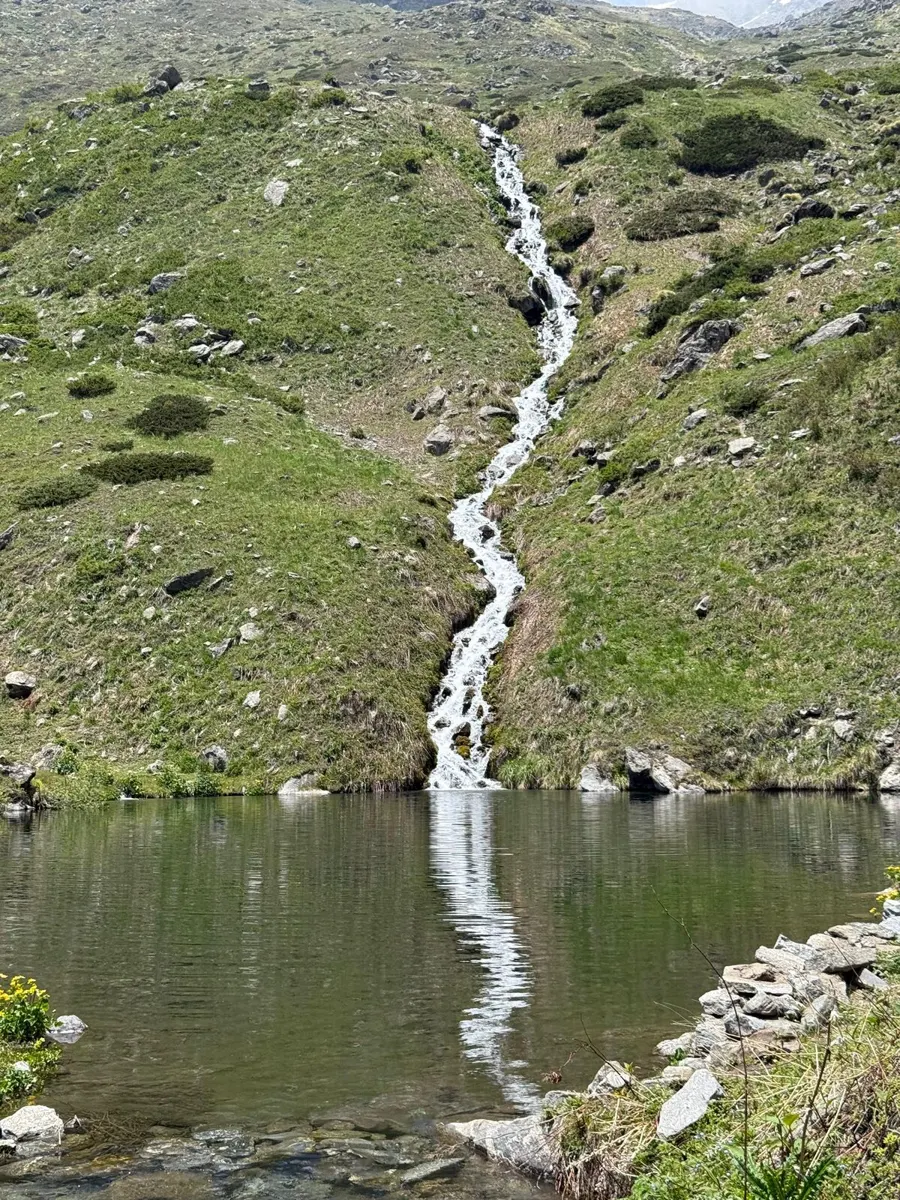
The trek begins at Yulla Khas village (≈2,985 m), about 20–25 km off NH-5 from Tapri. The trail is roughly 11–12 km one way and climbs about 900 m. It passes through deodar, oak and rhododendron forest, then open alpine meadows with views of the Kinnaur Kailash range. The upper camp is now about 2 km below the temple, so most yatris camp overnight, climb to the lake at dawn for darshan, and return the same day. The trek is rated easy to moderate.
How to reach Yulla Kanda
By road
Shimla → Narkanda → Rampur → Jeori → Tapri (NH-5) → Yulla Khas. From Shimla it is about 240 km (8–9 hrs); from Chandigarh about 355 km; from Delhi about 590 km. HRTC buses run to Tapri and Reckong Peo, and local taxis go from Tapri to Yulla Khas.
By train
The nearest major railhead is Chandigarh or Kalka. From Kalka, the toy train (UNESCO heritage Kalka–Shimla railway) goes up to Shimla, and you continue by road.
By air
Chandigarh International Airport (IXC) is the most practical airport, with direct flights from all metros. Shimla’s Jubbarhatti airport has limited flights.
Best time to visit
The trek is open from mid-May to mid-October. June and September–October have the clearest skies. July–August is monsoon, which is lush but can bring slippery trails and landslides on NH-5. Janmashtami is the most spiritual time to go. In winter the lake freezes and the route is snowbound.
What to carry
- Good trekking shoes with grip
- Warm layers: fleece, down jacket, cap and gloves (nights near 0 °C)
- Rain jacket / poncho
- Water bottle (2 L) & dry fruits
- Sunscreen, sunglasses, lip balm
- Personal medicines; consult a doctor if you have BP or heart issues
- ID proof (Aadhaar / passport for foreign nationals)
- A small Kinnauri cap or topi for the lake ritual
Frequently asked questions
Where is Yulla Kanda temple located?
+
Yulla Kanda is in the Rora Valley of Kinnaur district, Himachal Pradesh (Nichar tehsil). The temple stands on an island in a sacred lake at about 3,895 m (12,778 ft). The base village is Yulla Khas, reached via Tapri on NH-5, roughly 240 km from Shimla.
Is Yulla Kanda really the world’s highest Krishna temple?
+
Yes. At around 3,895 metres above sea level, the Yulla Kanda Shri Krishna temple is widely regarded as the highest temple of Lord Krishna in the world.
How long is the Yulla Kanda trek and how difficult is it?
+
The trek is about 11–12 km one way from Yulla Khas (≈2,985 m), with roughly 900 m of climbing. It is rated easy-to-moderate. Most pilgrims take 6–8 hours to go up, camp overnight and return the next day. Children above 10 and fit seniors regularly complete it with our guides.
What is the best time to visit Yulla Kanda?
+
Mid-May to mid-October. June and September–October bring clear skies; July–August is monsoon but green; Janmashtami (August/September) is the biggest festival, when thousands of devotees climb to the lake.
What is the Kinnauri cap ritual at Yulla Kanda?
+
Devotees place a traditional Kinnauri cap upside-down on the sacred lake. If it floats across without sinking, it is believed the coming year will be blessed and wishes will be fulfilled.
What is the legend of the Yulla Kanda temple?
+
Local belief holds that the Pandavas built the temple and the lake during their exile, and that the deity is swayambhu (self-manifested). The temple is managed by the local Bhagwen (Bhagwain) temple committee of Yulla.
Do you offer pickup from my city?
+
Yes. We run road pickups from Shimla, Chandigarh, Delhi NCR, Amritsar, Ludhiana, Dehradun, Haridwar, Rishikesh and Manali. Travellers from Mumbai, Bengaluru, Hyderabad, Kolkata, Pune, Ahmedabad, Chennai, Jaipur, Lucknow and Mathura–Vrindavan get a pickup at Chandigarh airport or railway station. Call +91 82193 96592 for any other city.
How do I book a Yulla Kanda package?
+
Call or WhatsApp +91 82193 96592, or fill in the booking form on this website. We confirm your dates, pickup point and group size, then share the payment details for a small advance to block your seats.